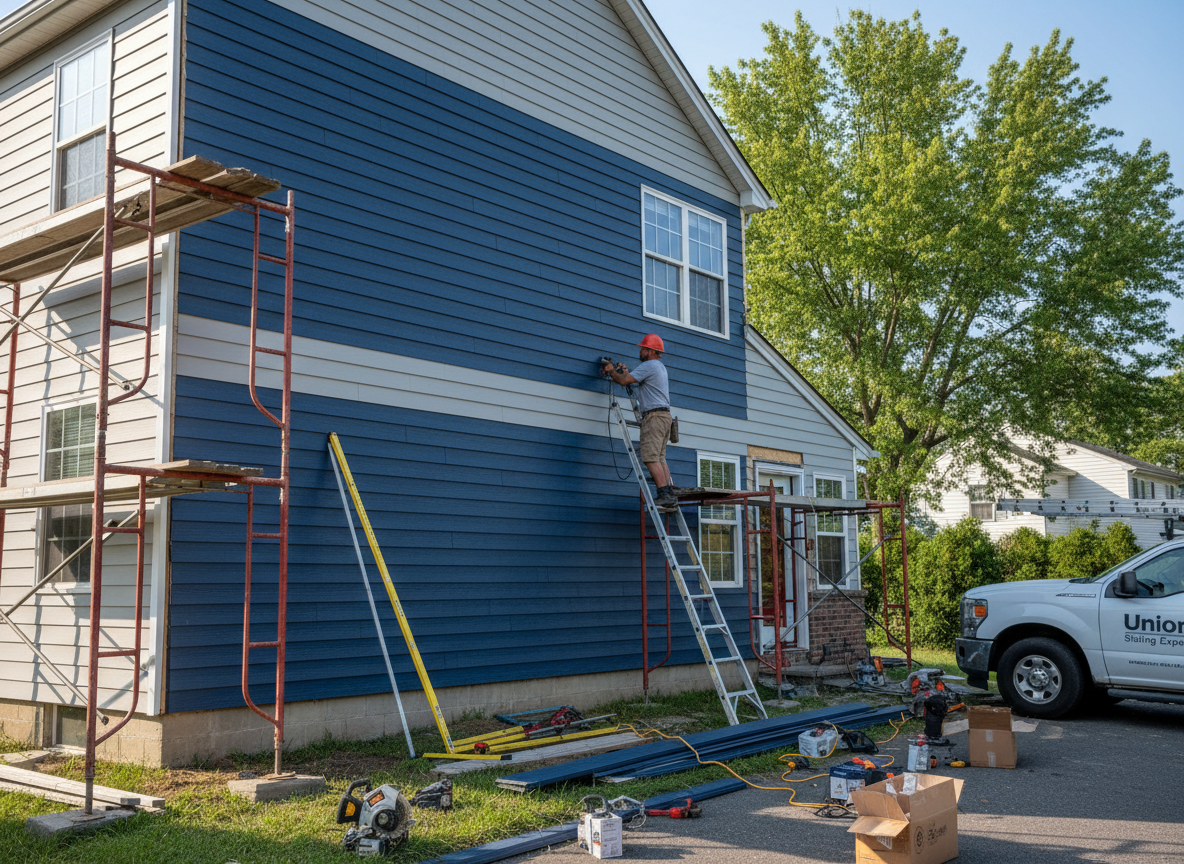
Exterior siding contractors in Union face constant humidity from the subtropical climate that drives moisture behind panels on homes built from the 1980s onward in Ryle and surrounding Boone County subdivisions. Vinyl and fiber cement both expand and contract with temperature swings even in mild winters, so proper ventilation and flashing at gable ends and around windows prevent the rot that shows up first near Union Community Park properties where tree cover holds moisture longer. Burlington and Florence commuters often request color matches that hold up under the region's frequent summer storms without fading on south-facing walls.
Older stock along US-42 corridors shows settled foundations that shift siding seams, requiring contractors to check for hidden water intrusion before any full replacement. Newer builds near Florence use engineered wood that needs specific gap tolerances to avoid buckling when humidity spikes above 70 percent for weeks. Skipping these checks leads to callbacks within two seasons because Boone County soil retains water and wicks it upward along bottom courses.
Code requirements in Union mandate proper housewrap overlap and weep holes at the base of each wall section, details that matter more here than in drier counties because mild winters allow continuous vapor drive rather than freeze-thaw cycles. Contractors who skip the inspection of attic ventilation while on site miss the single biggest driver of premature siding failure on two-story homes common along the Ryle border.
Seasonal Moisture Patterns
Union's humid air combined with mild winters keeps siding surfaces damp for longer stretches than northern Kentucky sees, so contractors inspect for algae streaks and soft spots under gutters every spring before summer heat locks in damage.
Technician insight
In Union the thing that catches most people out with exterior siding contractors is skipping the check for settled foundations along US-42 homes; the slight lean moves seams just enough that standard nailing schedules fail within two humid summers and water gets behind the new layer before anyone notices.
Ryle Home Siding Refresh
Homeowner near Union Community Park noticed soft spots at the base of south walls after a wet spring. Inspection showed missing weep holes and settled soil holding moisture against the bottom course. We removed the lower three feet of siding, added proper flashing and new housewrap, then reinstalled matching fiber cement with correct clearance. The walls now dry between storms instead of staying damp through the mild winter.
How it works
- 1
Site Assessment
Walk the full perimeter noting exposure to prevailing winds and proximity to trees that trap moisture around Union and Ryle homes.
- 2
Material Selection
Match existing profiles while upgrading ventilation details to handle Boone County humidity without trapping vapor behind the new layer.
- 3
Removal and Prep
Strip damaged sections, replace any compromised sheathing, and install new housewrap with taped seams before new siding goes up.
- 4
Installation and Trim
Hang panels with correct expansion gaps, install flashing at all penetrations, and finish with color-matched trim rated for the local UV and rain load.
- 5
Final Walkthrough
Check every seam and corner for proper clearance above grade and confirm attic vents remain unobstructed.
Pricing
Upfront quotes after on-site inspection account for material type, wall height, and any sheathing repairs required by local humidity exposure.