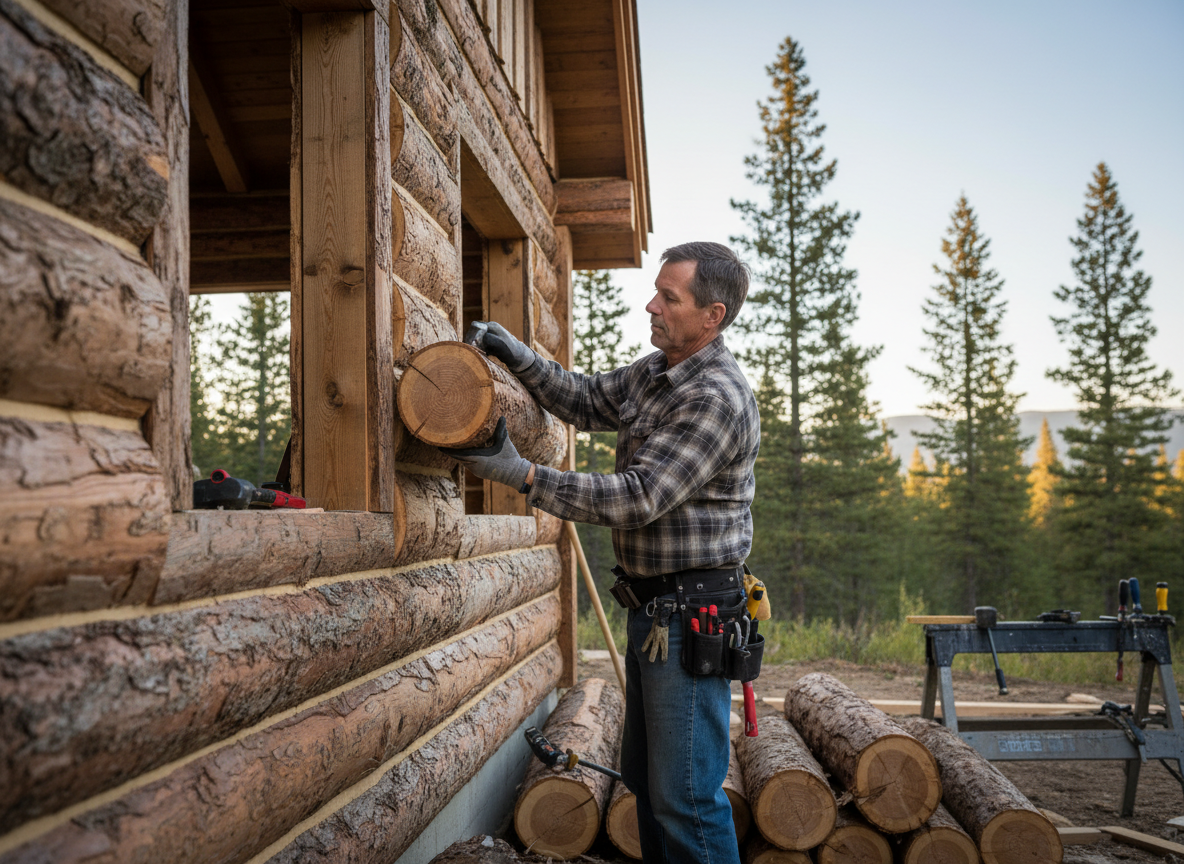
Log cabins in Union and Ryle often sit on older timber frames exposed to Boone County's humid subtropical conditions, where summer moisture drives wood expansion and winter rains test chinking integrity. Proper siding work here starts with assessing log diameter variation and existing stain penetration before selecting profiles that allow airflow behind the cladding. Mild winters extend the work window but increase the risk of trapping dampness if vapor barriers are installed too tightly against the logs.
Homeowners near Union Community Park or along US-42 frequently request siding that matches original hand-hewn surfaces while adding modern drainage planes. We route flashing around window bucks and corner notches to prevent water from migrating into the log ends, a common failure point when soil moisture from nearby fields rises during heavy rains. Edge cases include cabins with previous vinyl overlays that trapped condensation and accelerated rot at the sill logs.
Local building practices in Boone County require attention to wind-driven rain patterns from the south and west, so we install siding with offset joints and insect screening at the base. Florence and Burlington crews often see the same issues on newer log homes where synthetic chinking fails within five years due to UV exposure and temperature swings. Thorough prep includes power-washing with low pressure and treating end grain before new siding goes up.
Technician insight
In Union, the thing that catches most people out with log cabin siding is underestimating how the mild winters and high summer humidity let moisture sit in the logs longer than owners expect, especially on north-facing walls near Ryle where shade from mature trees slows drying.
Sill Log Replacement Near Union Community Park
A cabin in Union showed rot at the base logs after repeated rains. We found the original chinking had failed and trapped water against the sill. We replaced the damaged logs, added a drainage plane, and applied new chinking with expansion gaps. The cabin now sheds water properly and has stayed dry through the next wet season.
How it works
- 1
Site Assessment
Inspect log condition, moisture levels, and existing chinking at the Union address to map rot, checking, and drainage paths.
- 2
Material Selection
Choose profiles and finishes suited to humid subtropical exposure, matching diameter and grain of the original logs.
- 3
Prep and Flashing
Remove failed layers, install drainage planes, and seal log ends and window bucks against Boone County rain patterns.
- 4
Installation
Apply siding with proper gaps for expansion, then finish with breathable stain rated for local humidity.
- 5
Final Walkthrough
Review drainage performance and provide maintenance guidance specific to Ryle and Union terrain.
Pricing
Upfront quotes after on-site inspection at 9039 US-42, Union, KY 41091; cost varies by log condition and access.