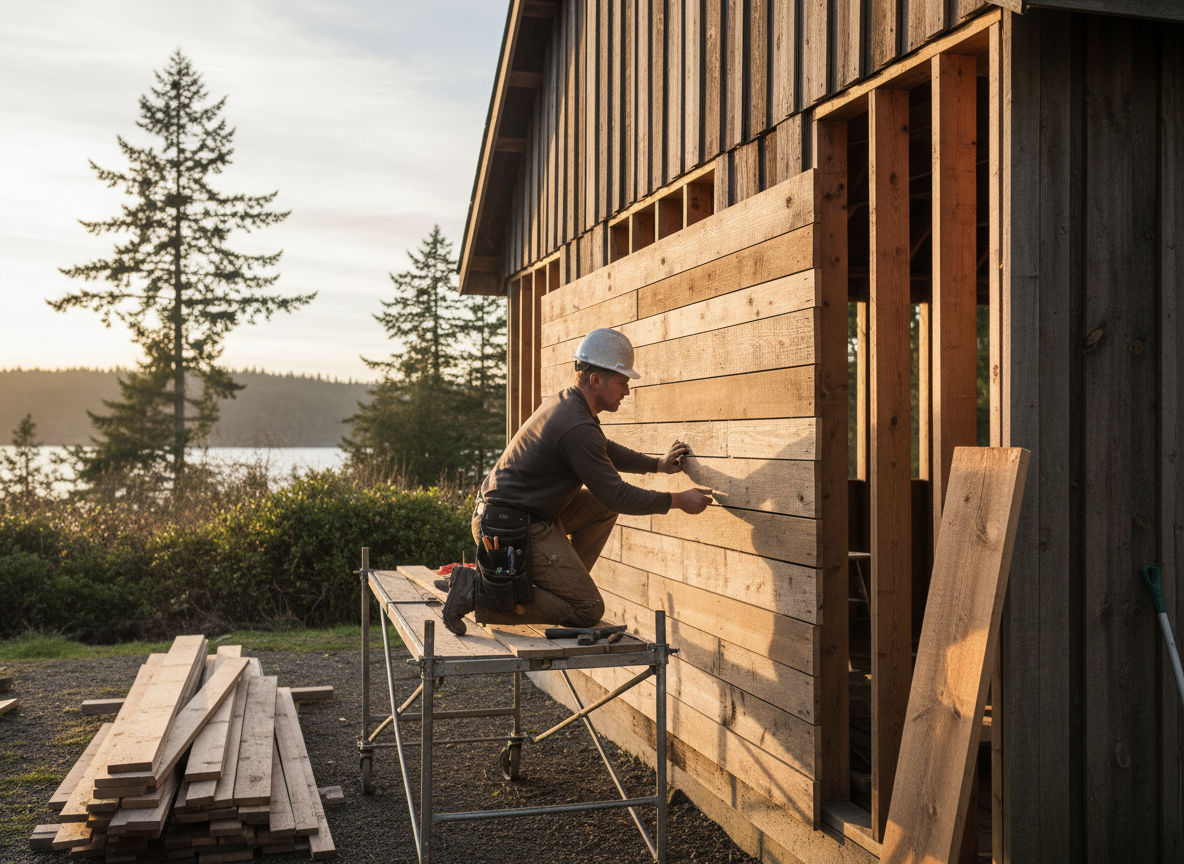
Sheds in Union and Ryle often sit on older residential lots where original wood siding meets repeated humidity cycles. In Boone County the humid subtropical climate keeps moisture levels elevated even through mild winters, so untreated or poorly vented siding develops rot along bottom plates and around door frames faster than in drier regions. Flux Mender selects fiber cement or primed engineered wood panels that resist swelling, then adds a rainscreen gap and sealed flashing at the base to keep water away from the sill.
Many sheds near Union Community Park were built on slightly sloped ground that directs runoff toward the structure during heavy summer storms. This creates chronic dampness at the north-facing wall, a common failure point. Proper prep includes checking soil grade, installing a gravel trench if needed, and using stainless fasteners that hold up to the occasional freeze-thaw events that still occur in Florence and Burlington winters.
Homeowners frequently attempt quick overlay repairs that trap moisture behind the old layer. That shortcut fails quickly here because the mild winters never fully dry the hidden surfaces. A correct job removes damaged boards, treats any mold, adds new housewrap where the shed framing allows, and finishes with color-matched caulk at every joint so the siding lasts through repeated humid seasons.
Technician insight
In Union, the thing that catches most people out with shed siding is the constant humidity that keeps wood damp even in mild winters, especially on sheds where the ground slopes toward the structure near Union Community Park or in Ryle backyards.
Ryle Shed Siding Replacement
A shed in the Ryle neighborhood showed widespread peeling along the lower walls after several humid seasons. Inspection revealed trapped moisture behind an earlier overlay repair and poor drainage at the base. We removed the damaged layers, corrected the grade slightly, installed new fiber cement panels with a rainscreen gap, and sealed all edges. The siding now resists the local moisture cycles without further rot.
How it works
- 1
Site Assessment
Walk the shed, note drainage patterns around the lot in Union or Ryle, and check for existing rot or ventilation issues.
- 2
Material Selection
Match siding type to exposure and choose products that handle Boone County humidity without warping.
- 3
Prep and Removal
Remove damaged sections, improve base grading if runoff is an issue, and apply new weather barrier.
- 4
Installation
Install new siding with proper overlaps, flashing, and fasteners rated for local conditions.
- 5
Final Sealing
Caulk joints, add trim where needed, and confirm ventilation paths remain clear.
Pricing
Cost depends on shed size, existing damage, and chosen material; upfront quotes provided after assessment.