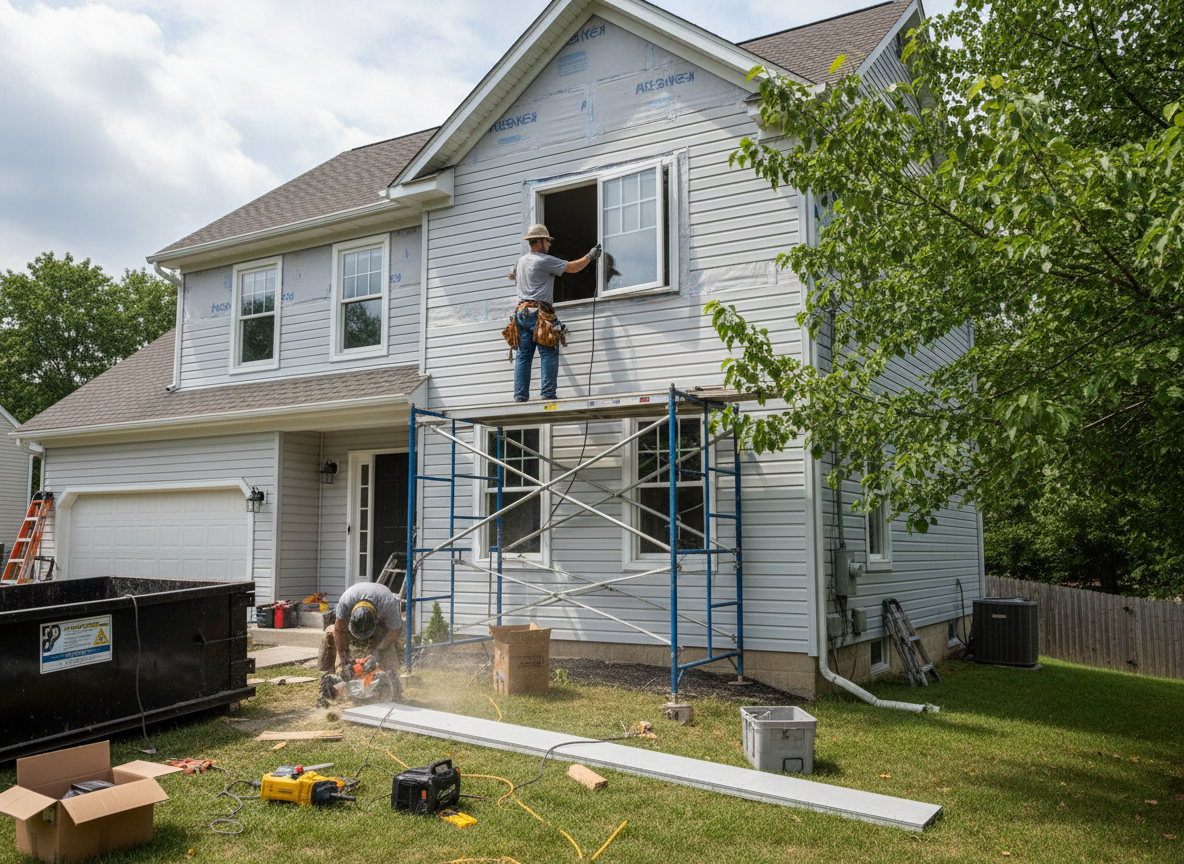
Union and Ryle neighborhoods feature a mix of mid-century ranch homes and newer builds where siding often meets window frames at critical seal points. Humid subtropical air drives moisture into joints during mild winters, accelerating rot behind vinyl or fiber cement when flashing is incomplete. Boone County codes require proper weep holes and housewrap integration on any exterior work near Union Community Park properties, where drainage slopes can funnel water toward foundations if not addressed during replacement.
Contractors working these jobs routinely encounter aluminum-clad windows from the 1980s that have lost thermal breaks, allowing condensation to migrate into adjacent siding. In Florence and Burlington border areas, soil movement from seasonal moisture changes can shift sill plates, creating gaps that standard caulk fails to hold. Proper removal of old sealant layers and installation of self-adhered flashing membranes prevents the callbacks common when crews skip these steps on Union jobs.
Edge cases include gable-end siding on Ryle properties exposed to prevailing winds that push rain under eaves, and window replacements in older Union stock where rough openings were never flashed originally. Matching existing profiles while upgrading to impact-rated glass or insulated panels requires on-site verification rather than catalog assumptions, especially when mild winter thaws create freeze-thaw cycles that stress new materials.
Technician insight
In Union, the thing that catches most people out with window and siding contractors is skipping the step where you pull back the old siding to check the sheathing around Ryle homes. Mild winters keep humidity high enough that hidden rot spreads fast once you open the wall, and the slight slopes near Union Community Park send water right back into those spots if the flashing isn't redone correctly.
Ryle Home Window Leak After Siding Update
Homeowner noticed water staining inside a second-story window after recent siding work. Inspection revealed incomplete flashing at the sill where new panels met the older frame. Crew removed the affected siding section, installed proper self-adhered flashing and new housewrap tie-in, then reinstalled matching siding and a thermally broken window unit. Interior moisture issues stopped and exterior seals held through the next wet period.
How it works
- 1
Site Assessment
Measure openings, inspect framing and existing flashing at the Union address, and note drainage patterns around the foundation.
- 2
Material Selection
Review siding and window options suited to Boone County humidity and mild winters, confirming compatibility with current home profiles.
- 3
Preparation and Flashing
Remove old materials, install self-adhered flashing and housewrap extensions, and verify weep paths before new work begins.
- 4
Installation and Finish
Set windows and siding panels, seal per manufacturer specs, and conduct water testing to confirm performance in local conditions.
Pricing
Upfront quotes provided after on-site assessment; scope and material choices determine final cost.